
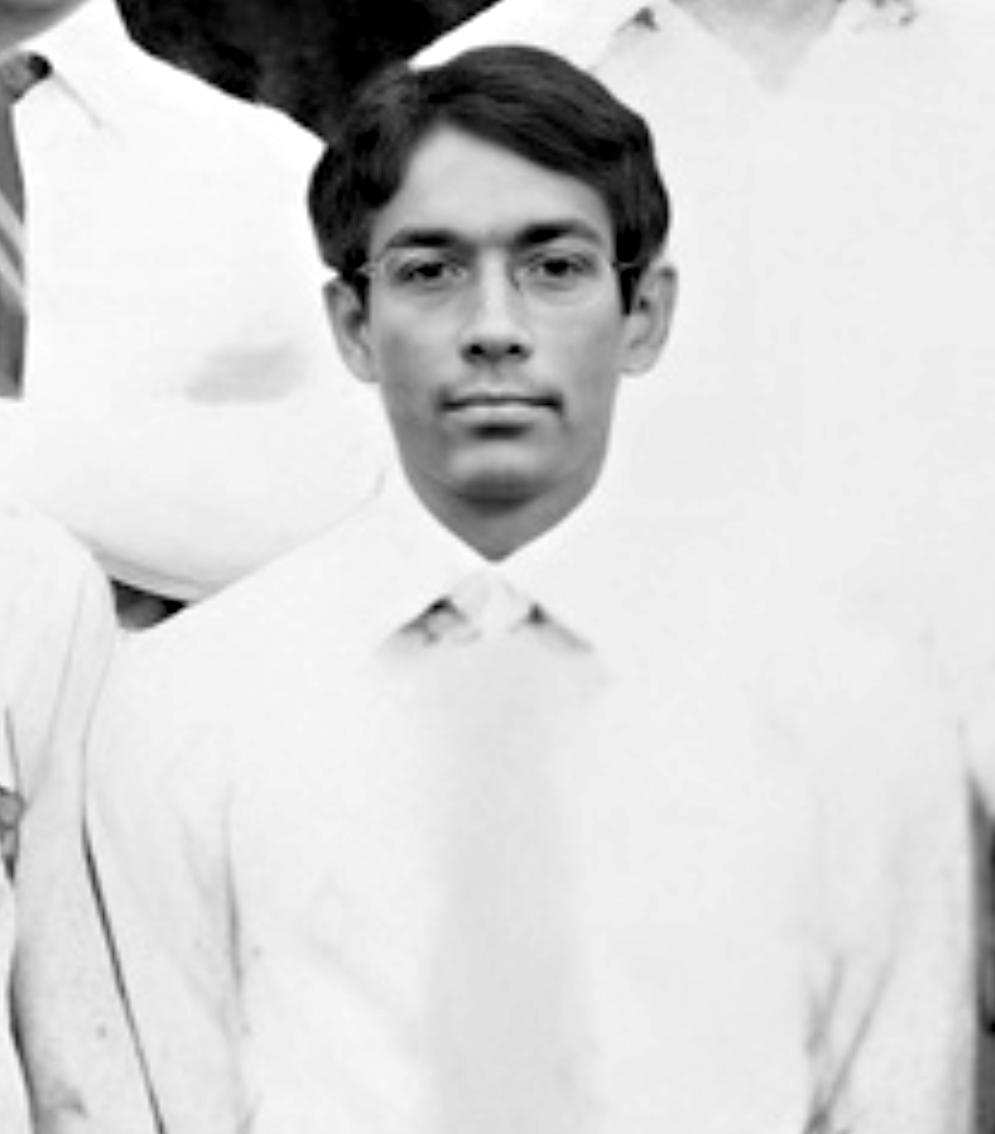
Sir Sabir Raza (Late)
Associate Professor - Urdu
Sir Sabir Raza (1938–2020)
A Living Institution of Urdu, Character, and Faith
A Man of Principles
Sir Sabir Raza’s personality was the embodiment of dignity, courage, and unwavering principles. He was a man who never bent before hardship, never compromised on values, and never allowed fear or convenience to dictate his conduct. Calm in demeanor yet unshakable in resolve, he faced life’s challenges with the composure of a seasoned warrior and the wisdom of a devoted guide.
He possessed the rare strength of inner bravery—the kind that does not announce itself loudly, but stands firm when trials arrive. Whether in moments of personal struggle or professional pressure, he remained steady, guided by faith, conscience, and an unbreakable moral compass. To him, character was not situational; it was absolute.
Sir Sabir Raza lived like a king in nature—not one crowned by authority, but by self-respect, discipline, and honor. He believed that true leadership begins with mastery over oneself. His life reflected self-control, fairness, and restraint, and his presence commanded respect without ever demanding it.
What made him truly exceptional was his desire to replicate this strength in others. He did not merely teach students subjects; he trained them to stand upright in life. He wanted his students to be fearless in truth, disciplined in action, and firm in principles—individuals who would never bow before injustice, temptation, or moral weakness.
He viewed obstacles not as barriers but as tests of character, and he taught by example that dignity is preserved by patience, courage, and unwavering faith. His silence in the face of provocation, his firmness in decision-making, and his consistency in conduct left a lasting impression on all who knew him.
If one line were to define him, it would indeed be:
“A Man of Principles.”
Sir Sabir Raza lived by principles, taught through principles, and departed leaving behind a legacy of principled human beings—strong in faith, noble in conduct, and brave in spirit. Such men do not fade with time; they become standards by which others are measured.
The Maestro of Urdu: Making the Difficult Beautiful
Before he was known as an administrator, mentor, or disciplinarian, Sir Sabir Raza was first and foremost a master of the Urdu language—a teacher whose command over the subject transformed fear into fascination.
To call him an Urdu teacher would be an understatement. He was a maestro, a craftsman of words, grammar, rhythm, and meaning. What made him extraordinary was not merely his knowledge, but his ability to transfer it—with clarity, elegance, and warmth—to students of every intellectual level.
1. Foundational Building Blocks (Primary to Middle Grades)
Sir Sabir Raza believed that language must first become friendly. When teaching Ism (noun), Fail (verb), and Harf (particle), he would never begin with dry definitions.
Instead, he would smile and say:
“Beta, jumla ghar hota hai. Ism us ghar ka malik hota hai, Fail uski harkat hoti hai, aur Harf uske darwazay.”
A simple sentence like:
“Ali kitab parhta hai.”
would become a living structure:
Ali — the Ism, the doer
parhta hai — the Fail, the action
kitab — the object receiving the action
Children who once feared grammar began to see sentences as living scenes, not rules to be memorized.
2. Core Grammar & Morphology (Middle to Secondary Grades)
When students reached topics like tarkeeb, wahid–jama, muzakkar–muannas, and zamana (tense), Sir Sabir Raza introduced logic before labels.
Woh likhta hai (present)
Woh likhta tha (past continuous)
Woh likh chuka hai (perfect)
Students didn’t memorize tense tables—they felt time moving inside language.
When explaining wahid aur jama, he connected grammar to life:
“Insaan akela ho ya jamaat mein, uski zimmedari badal jati hai—bilkul lafzon ki tarah.”
3. Advanced Grammar (Grades 9–12)
At the secondary and higher secondary level, where many teachers rushed through complex concepts, Sir Sabir Raza slowed down.
Topics like:
Murakkab jumlay
Muta‘addad fail
Majhool aur maloom jumlay
were explained with such clarity that even weaker students gained confidence.
For maloom vs majhool, he would say:
“Maloom jumlay mein zimmedari wazeh hoti hai. Majhool mein zimmedari chhup jati hai.”
Police ne chor pakra (Maloom)
Chor pakra gaya (Majhool)
This was not just grammar—it was a lesson in accountability.
4. Stylistics & Rhetoric (Grades 11–12)
When it came to Balaghat, Tashbeeh, Isti‘ara, and Muhawarat, Sir Sabir Raza’s classroom turned poetic.
Explaining tashbeeh, he would say:
“Seedhi baat zehan ko samajh aati hai, lekin tasveer dil ko yaad rehti hai.”
A line like:
“Us ka chehra chand ki tarah tha”
became a gateway into aesthetics, emotion, and cultural depth.
Students didn’t just pass exams—they fell in love with Urdu.
Humble Beginnings, Relentless Struggle
Muhammad Sabir Raza was born on 28 June 1938 in Mandi Dhaban Singh (now Safdarabad, Sheikhupura). His early education up to matriculation was completed there, under modest circumstances.
His journey forward was paved not with privilege, but perseverance.
From 1960 to 1962, he studied at Oriental College Lahore for HSSC.
From 1963 to 1965, he completed his graduation from Punjab University.
Between 1966 and 1970, he earned Master’s degrees in Punjabi and then Urdu.
Throughout these years, survival and education walked side by side. He supported himself through tuitions and odd jobs, never allowing hardship to dilute his dignity.
From Oriental College to the Birth of ICB
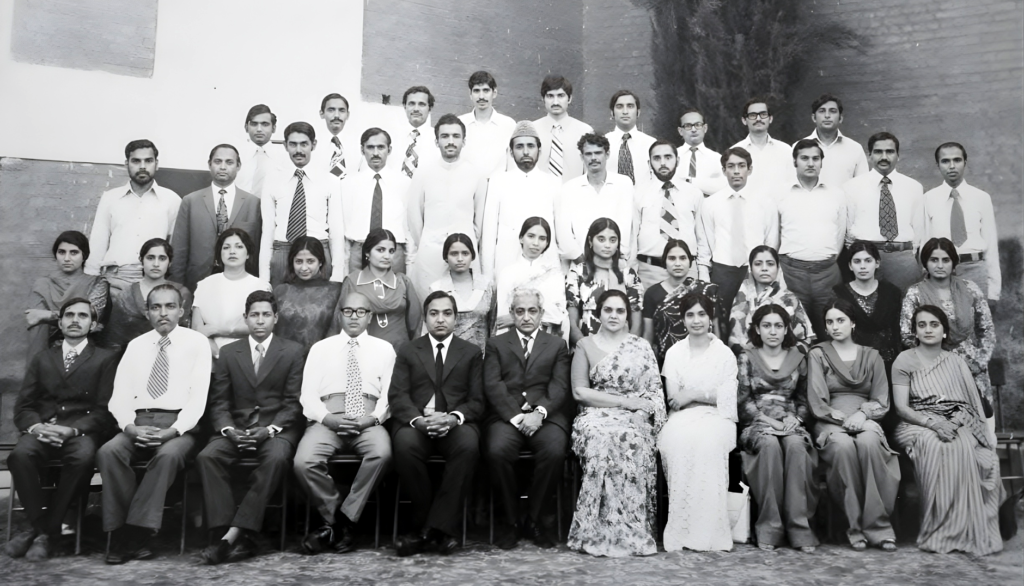
After completing his studies, Sir Sabir Raza began teaching at Oriental College, Lahore—first teaching Punjabi, another language he deeply understood.
In 1976, destiny called him to the newly formed capital. He joined IMS, which later became the legendary Islamabad College for Boys (ICB).
He began as a Lecturer, rose to Assistant Professor, then Associate Professor, serving the institution faithfully until his retirement in 1998.
In 1988, while already an established academic, he completed his M.Phil in Urdu, proving that learning never retires.
Leadership Beyond the Classroom
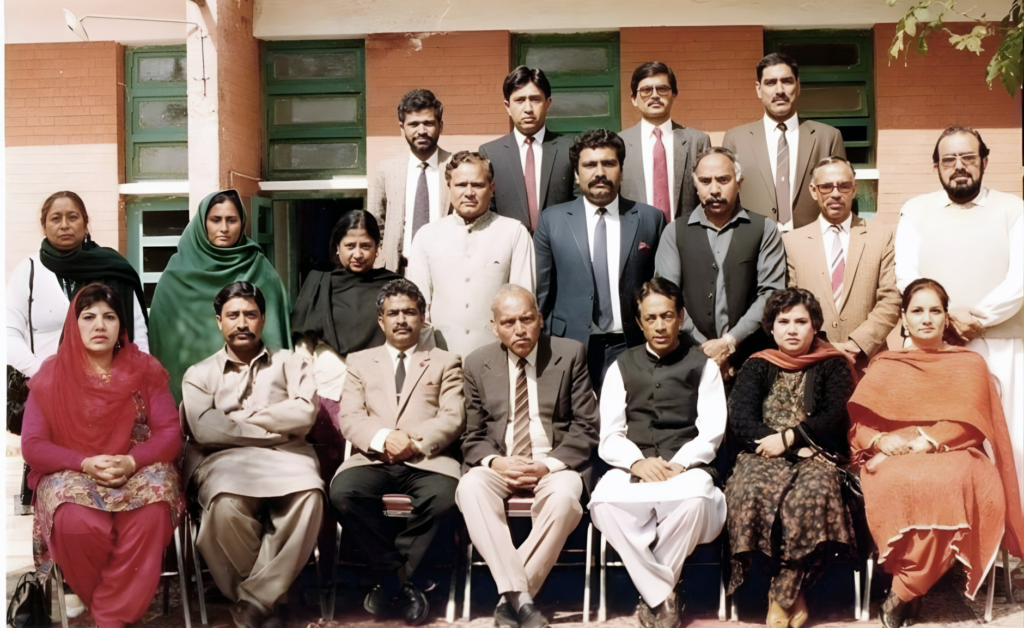
From 1992 to 1994, he served as Vice Principal, IMCB F-8/4, before returning to ICB.
He was also:
House Master of Quaid-e-Azam House, organizing debates, essay competitions, and sports
In-charge of the College Football Team for over 10 years
Under his coordination, ICB consistently won inter-collegiate football championships, a testament to his discipline, planning, and motivational leadership.
Discipline with Compassion
Sir Sabir Raza believed discipline was a form of guidance, not punishment.
When correcting students, his aim was never to break confidence but to realign character. Even disciplinary actions carried lessons meant for life—lessons students remembered long after leaving college.
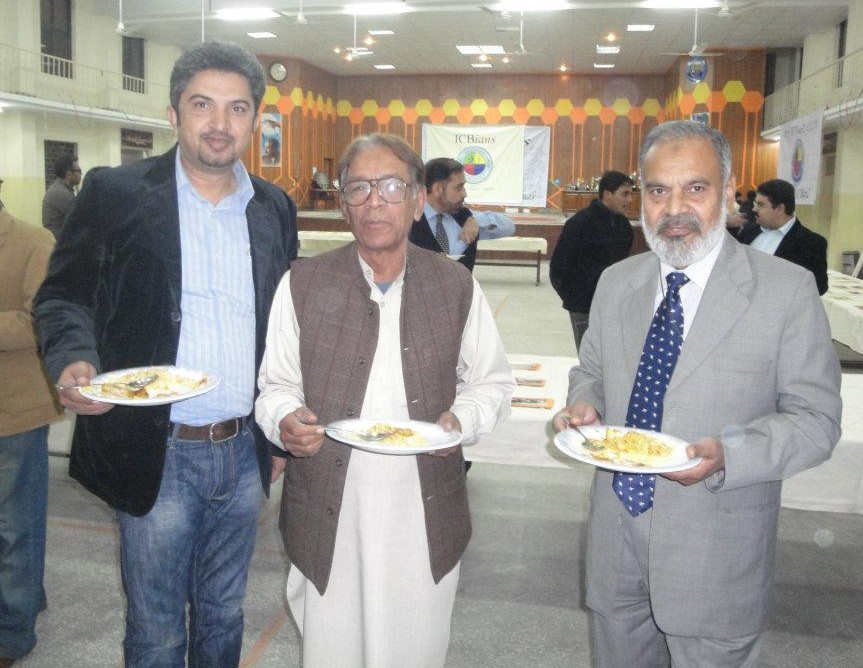
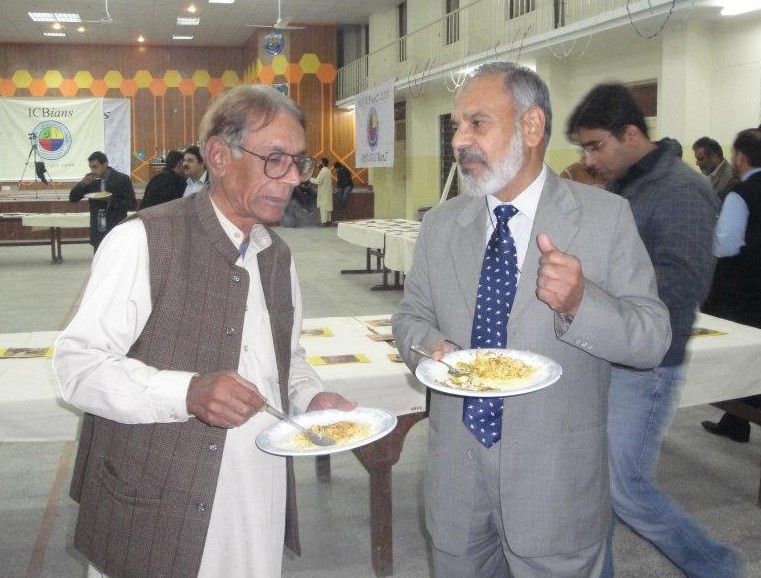
A Memorable Hi-Tea with a Living Legend (2012)
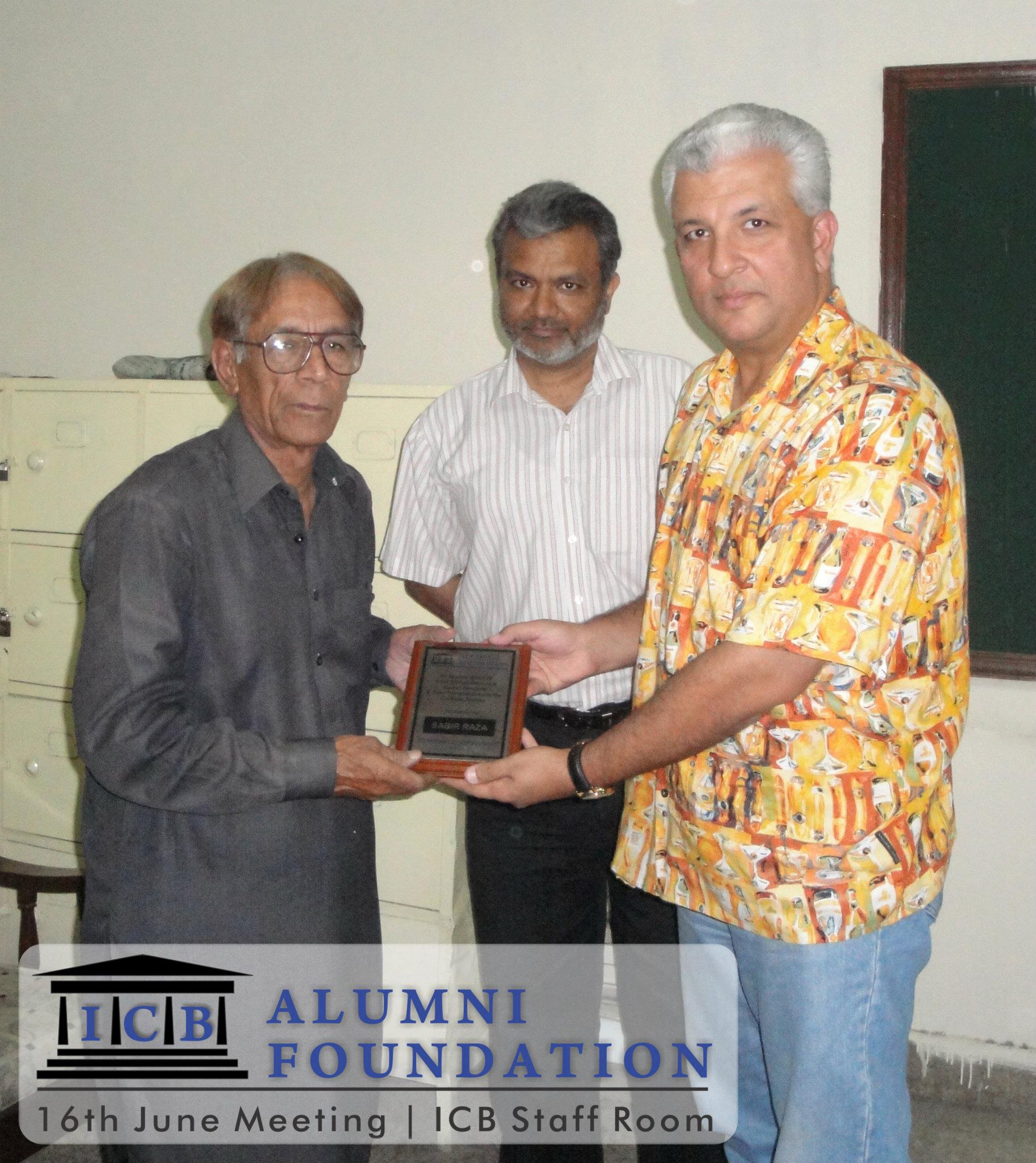
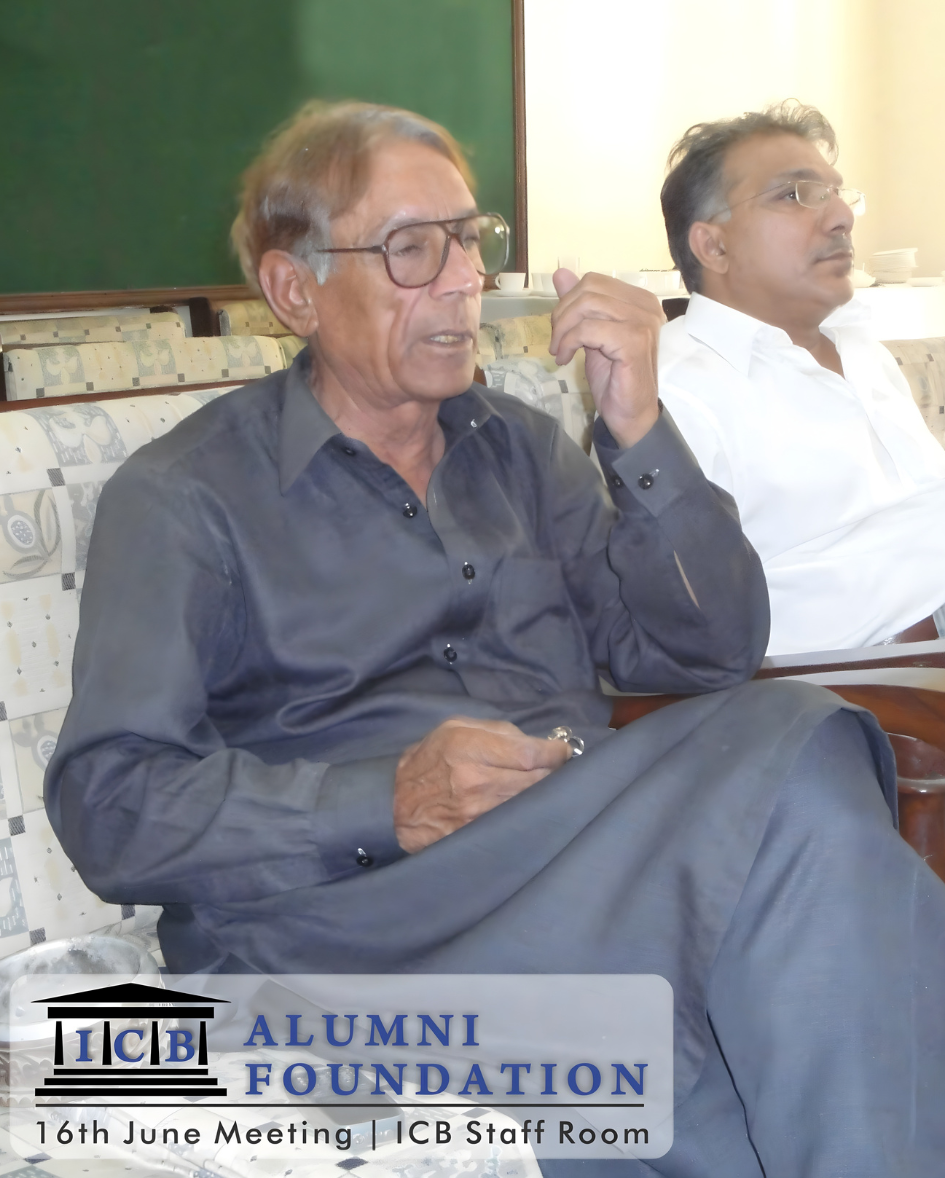
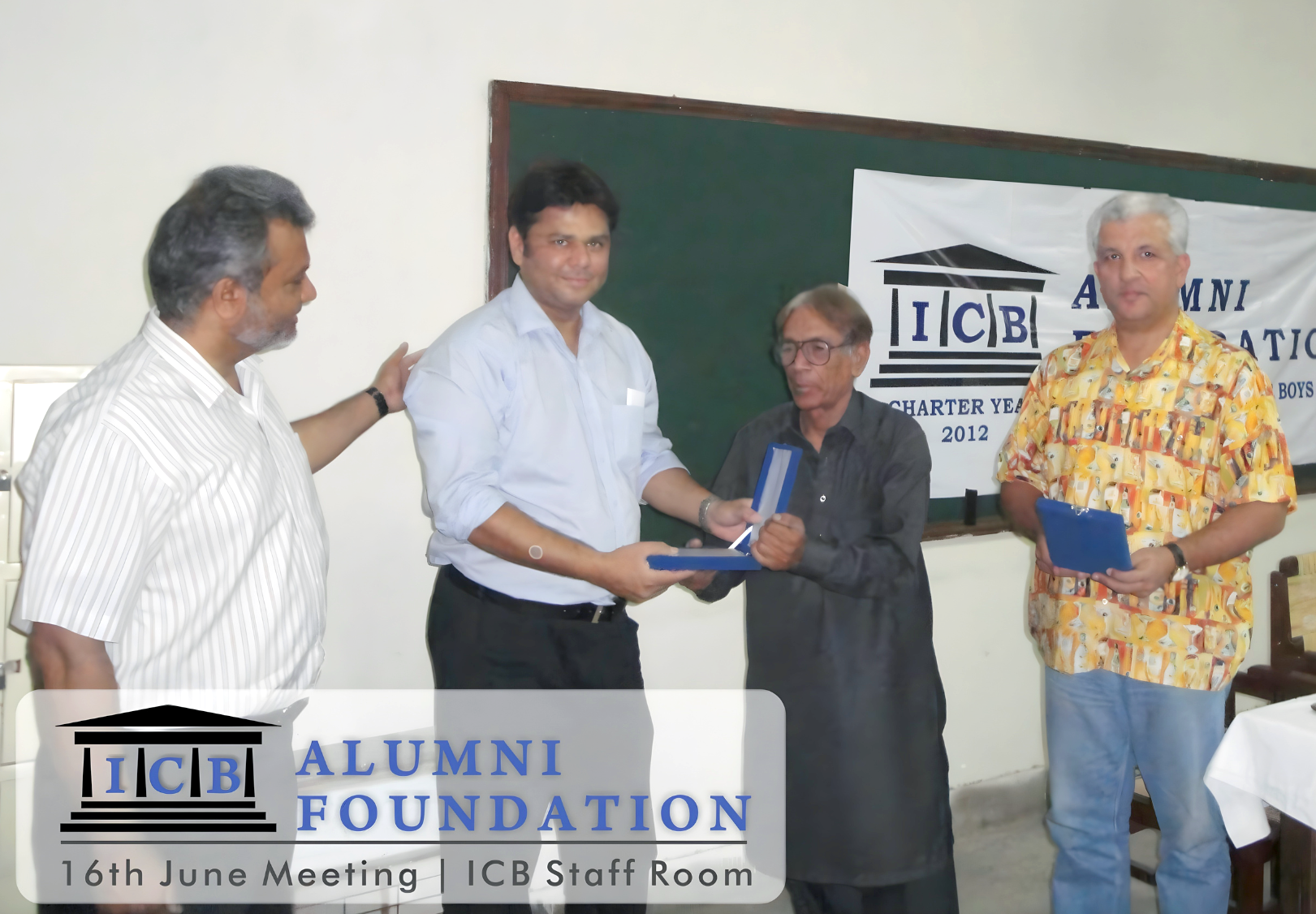
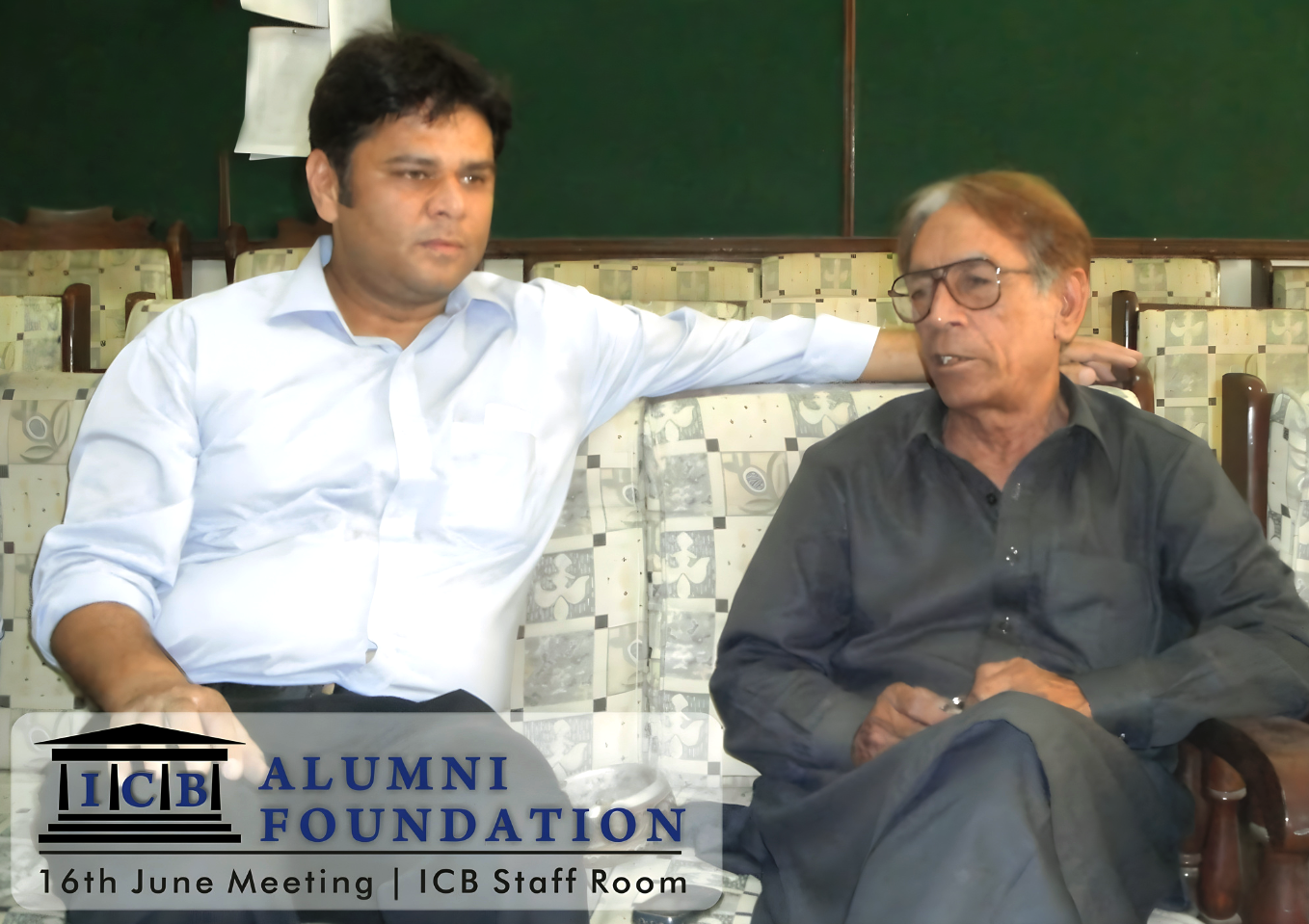
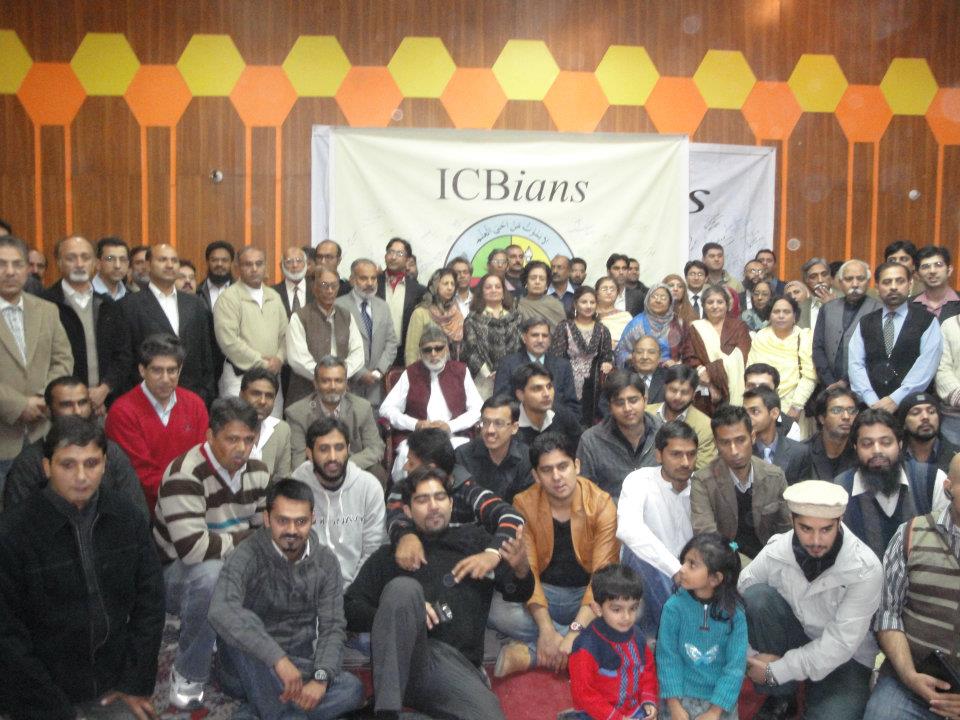
In 2012, the ICB Alumni Foundation organized a graceful Hi-Tea gathering that became an unforgettable moment in the collective memory of ICBians. The occasion was made truly special by the presence of Sir Sabir Raza as the Chief Guest—a name that instantly stirred excitement, respect, and admiration among students and alumni alike.
From the moment he arrived, the atmosphere was charged with anticipation. Students gathered eagerly, many meeting him in person for the first time, while others were reunited with a teacher whose influence had shaped their formative years. The joy, reverence, and emotional connection in the room reflected how deeply loved and respected he was across generations.
The most beautiful and defining moment of the evening came when Sir Sabir Raza shared his life journey. With humility and clarity, he spoke about his early struggles, his years of learning and teaching, and the principles that guided him through every phase of life. His words were not mere recollections; they were lessons drawn from lived experience, offered sincerely for the benefit of his students.
He spoke about discipline, patience, faith, self-respect, and the courage to remain firm in one’s values. Each memory he shared carried wisdom, and every piece of advice felt personal, as if he were still standing in a classroom shaping minds and characters. Students listened in silence, absorbing guidance that went far beyond academics—guidance meant for life itself.
That Hi-Tea was not just a social gathering; it was a meeting of hearts and generations. The interaction left a lasting impression on all present, reinforcing the truth that Sir Sabir Raza was not merely a teacher of the past, but a continuing source of inspiration. The photographs from this event capture more than moments—they preserve the presence of a man whose wisdom, grace, and principles continue to guide ICBians to this day.
A Life of Faith, Integrity, and Emotional Strength
Beyond academia, Sir Sabir Raza was a living embodiment of Islamic character.
An early riser, firm in discipline, and deeply grounded in taqwa, he lived by the Sunnah of consistency and self-control. His faith was not theoretical—it was visible.
In the most difficult moments, he remained calm, often saying:
“Allah behtar karay ga… Allah malik hai.”
These were not words of comfort, but proof of emotional intelligence and unshakable iman.
His commitment to halal rizq was absolute. He raised his children on honesty, truth, and fear of Allah, living by the divine command:
“O mankind, eat from whatever is on earth that is lawful and good.”
(Surah Al-Baqarah 2:168)
He stayed far from dishonesty, falsehood, and harmful habits, believing that true honor lies in righteousness:
“Indeed, the most noble of you in the sight of Allah is the most righteous of you.”
(Surah Al-Hujurat 49:13)
Retirement, Health, and Graceful Living
After retirement, he taught briefly at a private university, then chose to focus on health and family. Even between 60 and 70 years of age, he regularly played table tennis, maintaining remarkable physical fitness.
He lived a healthy life until the age of 75, when heart disease appeared for the first time. He passed away on 20 August 2020, having lived 82 years of dignity, service, and faith.
An Ever-Living Legacy
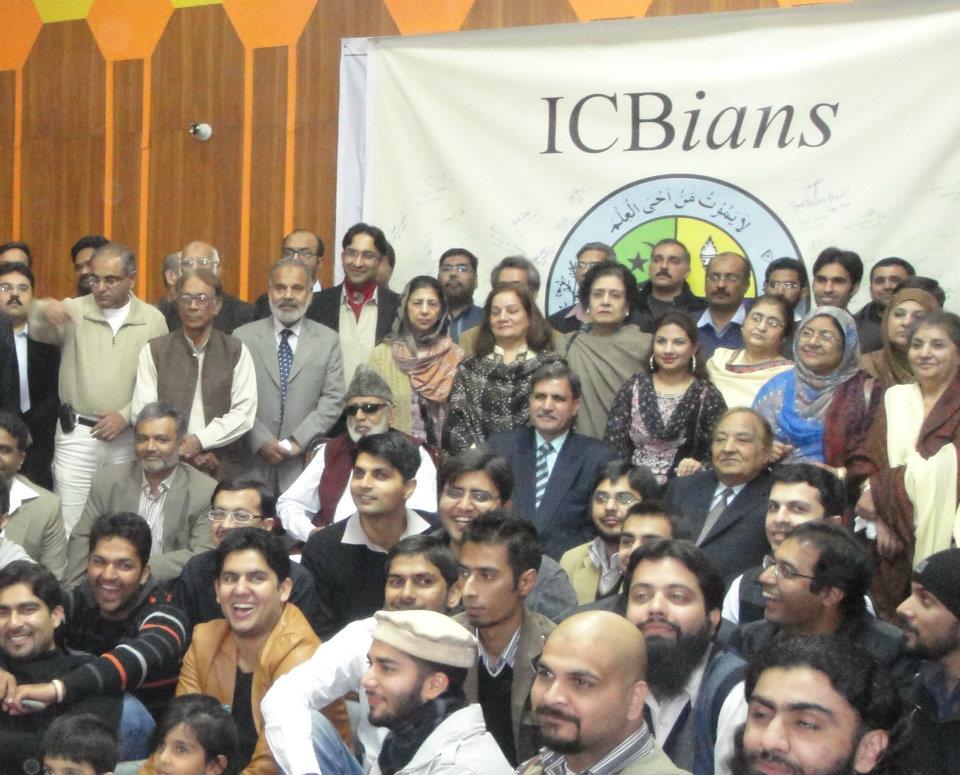
Sir Sabir Raza shaped not just students, but generations of human beings. His students remember:
His fairness
His discipline
His sincerity
His unforgettable style of teaching
Through them, his knowledge continues as sadaqah jariyah.
Sir Sabir Raza was not merely a teacher.
He was an institution within himself.
May Allah elevate his rank, illuminate his grave, and grant him Jannatul-Firdaus. Ameen.
With Gratitude
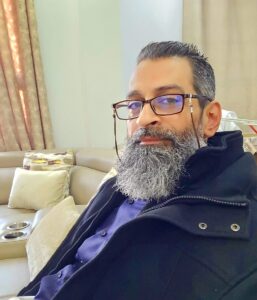
We extend our sincere and heartfelt thanks to Dr. Asher Raza, son of the late Sir Sabir Raza, for his invaluable contribution to this tribute. His thoughtful sharing of personal memories, life details, and lived experiences made it possible to present not just a professional profile, but the true essence of the man behind the legacy.
Through his words, we were able to witness Sir Sabir Raza not only as a legendary teacher and institutional pillar, but also as a father of strong faith, discipline, and unwavering principles. Dr. Asher Raza’s cooperation ensured that this narrative remains authentic, dignified, and deeply human—reflecting the values Sir Sabir Raza lived by and instilled in generations.
We are truly grateful for his trust and support in preserving and sharing a legacy that continues to inspire students, educators, and readers alike. Click the link to visit Dr. Asher Raza’s Profile: 
Cherish the golden days of ICB with us!
Cherish the golden days of ICB with us, where every page tells a story of friendship, growth, and unforgettable moments. Celebrate the spirit of ICB with us, as we reconnect with the past and honor the roots that made us who we are today. Walk through the halls of nostalgia with ICBians.com, where every profile is a tribute to the timeless magic of ICB.